

By Saheli Plus | February 26, 2025
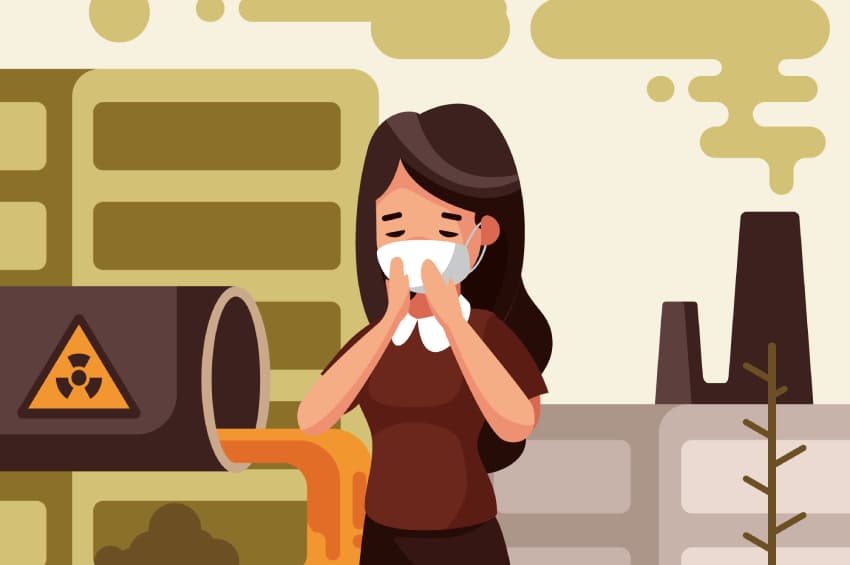
Reproductive health is an integral part of your overall well-being. Any impact on your reproductive health can seriously affect your quality of life. Environmental factors and lifestyle choices are profound threats to your reproductive health.
With the air quality index dipping to dangerous levels, pollutants contaminating our water sources, and harmful chemicals in everyday products exposing us to health risks, we face significant threats to menstrual health and fertility. Understanding these risks and minimising exposure to chemicals and pollutants is essential for maintaining good reproductive health.
This article explores the various environmental factors affecting reproductive health and lists ways to mitigate them.
Air pollution is a major cause of reproductive health issues. Pollutants such as PM2.5, carbon monoxide (CO), and heavy metals are linked to various reproductive health issues.
Water sources get contaminated by industrial chemicals, pesticides, and heavy metals. Drinking polluted water can seriously affect your reproductive health.
Everyday products, including cosmetics, personal care items, and even non-stick cookware, may contain harmful chemicals. Many of these chemicals are endocrine disruptors that interfere with normal hormonal function.
Exposure to electromagnetic fields (EMFs) from mobile phones, Wi-Fi, and electronic devices, along with rising global temperatures and extreme weather events, are linked to adverse reproductive health outcomes.
Managing environmental risks is crucial for reproductive health, but an overlooked aspect is contraception choice. Hormonal contraceptives can cause hormonal imbalances, undermining efforts to preserve reproductive wellness.
Saheli Plus is a non-hormonal birth control pill that does not impact the body’s natural hormonal cycle. It has been extensively used in government family planning programs for over 30 years, proving its safety and effectiveness.
Environmental factors play a significant role in shaping reproductive health, with pollution, chemicals, and lifestyle choices affecting fertility and hormonal balance. By understanding these risks and making informed choices, you can take charge of your reproductive well-being. Reducing exposure to harmful toxins and adopting healthier lifestyle habits can go a long way in preserving reproductive health.
Environmental pollutants, toxins, and lifestyle factors disrupt hormonal balance, affect egg and sperm quality, and increase risks of infertility, pregnancy complications, and menstrual irregularities.
Hormonal balance, environmental toxins, lifestyle choices, infections, and genetics impact reproductive health, influencing fertility, menstrual cycles, and overall reproductive function.
Age, lifestyle habits, environmental pollution, medical conditions, and access to reproductive healthcare significantly impact fertility rates in both men and women.
Hormonal imbalances, including conditions like PCOS and endometriosis, along with environmental toxins and lifestyle factors, are major causes of infertility in women.
By Saheli Plus | March 24, 2026
By Saheli Plus | March 3, 2025
By Saheli Plus | February 24, 2026
By Saheli Plus | February 5, 2026
By Saheli Plus | January 22, 2026
By Saheli Plus | January 6, 2026
By Saheli Plus | December 19, 2025
By Saheli Plus | December 4, 2025
By Saheli Plus | November 25, 2025
By Saheli Plus | November 4, 2025