

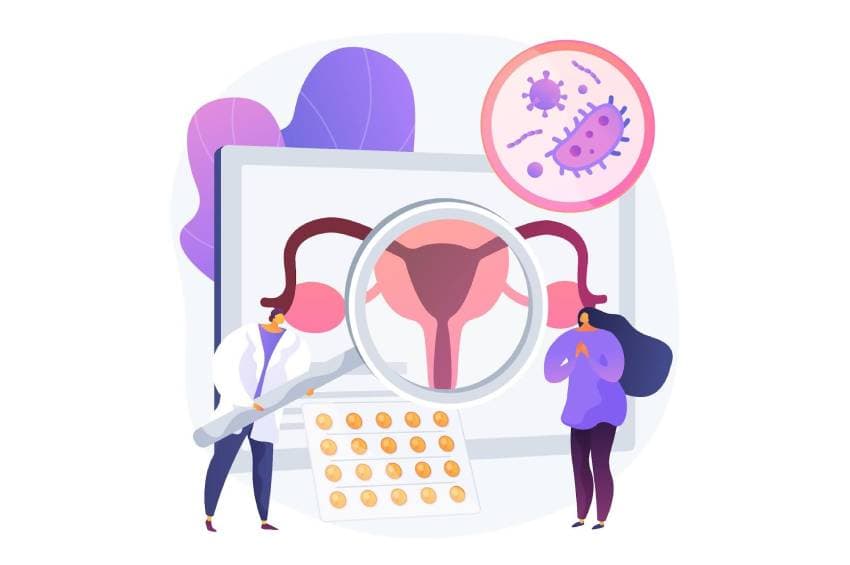
Numerous health conditions, environmental factors, lifestyle, and various other factors affect women's reproductive health and fertility. Sexually Transmitted Infections (STIs) are also among the factors affecting fertility. The link between STIs and fertility impact is studied and documented in numerous research papers, such as the review titled “Sexually transmitted diseases and infertility”, published in the American Journal of Obstetrics and Gynaecology, and the review titled “The Impact of Selected Bacterial Sexually Transmitted Diseases on Pregnancy and Female Fertility”, published in the International Journal of Molecular Sciences.
Sexually Transmitted Infections are not just short-term infections; they can cause chronic health issues if they are left untreated. They can silently damage reproductive organs, deteriorate reproductive health, and significantly affect future fertility.
It is better to prevent STIs in the first place rather than treat them after infection. You can achieve that by adopting safer sex practices and using appropriate contraception methods. Choosing the right contraception methods not only prevents unwanted pregnancies but also plays a crucial role in infertility prevention by protecting you against sexually transmitted infections.
This article explains the connection between STIs and fertility, and how untreated Sexually Transmitted Infections can cause infertility. It highlights why you should adopt a dual-protection approach to support safer sex and long-term reproductive health.
What Are STIs?
Sexually Transmitted Infections (STIs) are, as the term suggests, infections that spread primarily through sexual contact. They are caused by pathogens transmitted through bodily fluids or skin-to-skin contact.
Common STIs include:
- Chlamydia
- Gonorrhoea
- Human Papilloma Virus (HPV)
- Herpes Simplex Virus (HSV)
- Syphilis
- HIV
Who is at Risk of Getting STIs?
All sexually active individuals can contract Sexually Transmitted Infections. However, the risk of getting STIs significantly increases when you have:
- Unprotected sex without using contraception methods that prevent exposure to infected bodily fluids.
- Multiple sexual partners.
- A sexual Partner with an untreated STI.
- Inconsistent STI Testing, skipping regular testing and screening.
- A previous STI History - having one STI increases susceptibility to others.
3 Ways STIs Affect Fertility
STIs affect fertility in the following ways.
1. Silent Infections Cause Lasting Damage
STIs can remain in the body silently, without causing major symptoms. For instance, chlamydia and gonorrhoea can remain in a woman's body, showing minimal symptoms, allowing the infection to progress unnoticed. This prevents timely detection and treatment. Even a single untreated infection can affect future fertility.
2. Recurrent Infections Increase Risk
Having an STI can increase the risk of serious impact on reproductive health and fertility. The risk multiplies as more infections occur. Repeated exposure to STIs increases cumulative reproductive damage. Repeated infections occur when you do not follow safer sex practises consistently, especially when your partner has an untreated STI.
3. Delayed Testing Complicates the Problem Further
Preventing STIs from damaging your reproductive health and increasing the risk of infertility requires regular STI testing and screening. They are critical for early diagnosis and treatment. However, stigma and lack of awareness can deter many individuals from routine STI testing and screening. This can lead to delayed detection and treatment.
Without timely medical intervention, these infections can severely damage your reproductive health and cause serious health conditions, such as pelvic inflammatory disease (PID), which scars the fallopian tubes, causes tubal blockage, and increases the risk of infertility, ectopic pregnancy, and chronic pelvic pain.
It is better to safeguard yourself from sexually transmitted infections and prevent their impact on fertility rather than fighting them. This is where contraception plays an important role.
Contraception and STI Protection
Some believe using any contraception method can safeguard them against STIs. However, contraceptives are primarily aimed at preventing pregnancies. While some contraceptive methods provide protection against STIs, others don't.
Barrier methods like condoms offer protection against STIs by creating a physical barrier that prevents the exchange of bodily fluids. It is crucial to use these contraception methods correctly and consistently to reduce the risk of STI transmission. However, no method offers 100% protection even with correct and consistent use.
Moreover, even with consistent use of condoms, the risk of getting STIs remains the same for infections transmitted through skin-to-skin contact.
OCPs: The Most Effective Contraception Method for Women
The ideal contraceptive method for women is Oral Contraceptive Pills (OCPs). They are highly effective, affordable, easily accessible, and can be purchased discreetly by women without stigma and judgement.
However, they do not offer protection against STIs. Understanding this is crucial for fertility protection. Moreover, they modulate the reproductive hormones to achieve contraception; as a result, they affect your natural hormonal balance and cause side effects such as nausea, mood changes, weight fluctuations, and headaches.
So, on the one hand, to achieve effective contraception without suffering from any side-effects or hormonal imbalance, Women need a safe, non-hormonal contraceptive. On the other hand, to protect against STIs, they need a barrier method. To achieve effective contraception with convenience and protection against STIs at the same time, women should adopt a dual protection approach, combining a safe, effective, non-hormonal contraception with a barrier method. This is where Saheli Plus becomes important.
Saheli Plus: A Smarter Non-Hormonal Contraceptive Option to Pair with Barrier Methods
Saheli Plus is a safe, non-hormonal contraceptive designed to prevent pregnancy without disrupting natural hormonal balance. It is ideal for combining with a barrier method like condoms for achieving effective contraception while having robust protection against STIs. Together, they support fertility preservation and responsible reproductive planning.
Saheli Plus has effectiveness comparable to hormonal pills. But unlike traditional hormonal pills, Saheli Plus:
- Does not use synthetic hormones to achieve contraception.
- Avoids side effects associated with hormonal pills.
- Preserves the natural hormonal balance and menstrual cycle.
Safer Sex Practices for Infertility Prevention
Following these safer sex practices proactively helps you protect fertility.
- Use condoms consistently along with another effective contraception method like Saheli Plus.
- Opt for regular STI testing and screening.
- Diagnose and treat infections promptly.
- Have open communication with your partner.
Final Thoughts: Protect Today to Preserve Tomorrow
The link between STIs and fertility is well established. Untreated Sexually Transmitted Infections can lead to serious health conditions like pelvic inflammatory disease, causing irreversible damage to reproductive health and fertility.
Following safer sex practices can help prevent STIs. This involves regular screening for infections and consistently using the right contraceptive methods. It is also important to understand the limits of contraception methods like OCPs that are designed for preventing pregnancy and not to protect against STIs.
Combining a safe, non-hormonal contraception method like Saheli plus with a barrier method like condoms can be a smarter approach for preventing STIs. This dual strategy supports safer sex, infertility prevention, long-term reproductive health, and effective pregnancy prevention without any side effects or impact on hormonal balance. Making safer choices today protects your fertility tomorrow.
FAQs
1. Do oral contraceptive pills prevent STIs?
No. Oral Contraceptive Pills (OCPs) are designed to prevent pregnancies. They do not protect against Sexually Transmitted Infections. Using additional barrier methods like condoms along with OCPs helps prevent STIs.
2. Do condoms 100% protect you from STDs?
While condoms significantly reduce the risk of STIs with correct and consistent usage, they do not provide 100% protection. The risk of infection remains, more so for infections transmitted through skin-to-skin contact.
3. Is there a pill that prevents STIs?
Currently, there is no pill that prevents all STIs.
4. What is STI prevention?
STI prevention includes following some best practices for preventing sexually transmitted infections. These measures include consistent condom use, regular STI testing and screening, limiting sexual partners, open partner communication, prompt treatment, and combining contraception with barrier methods for dual protection.